
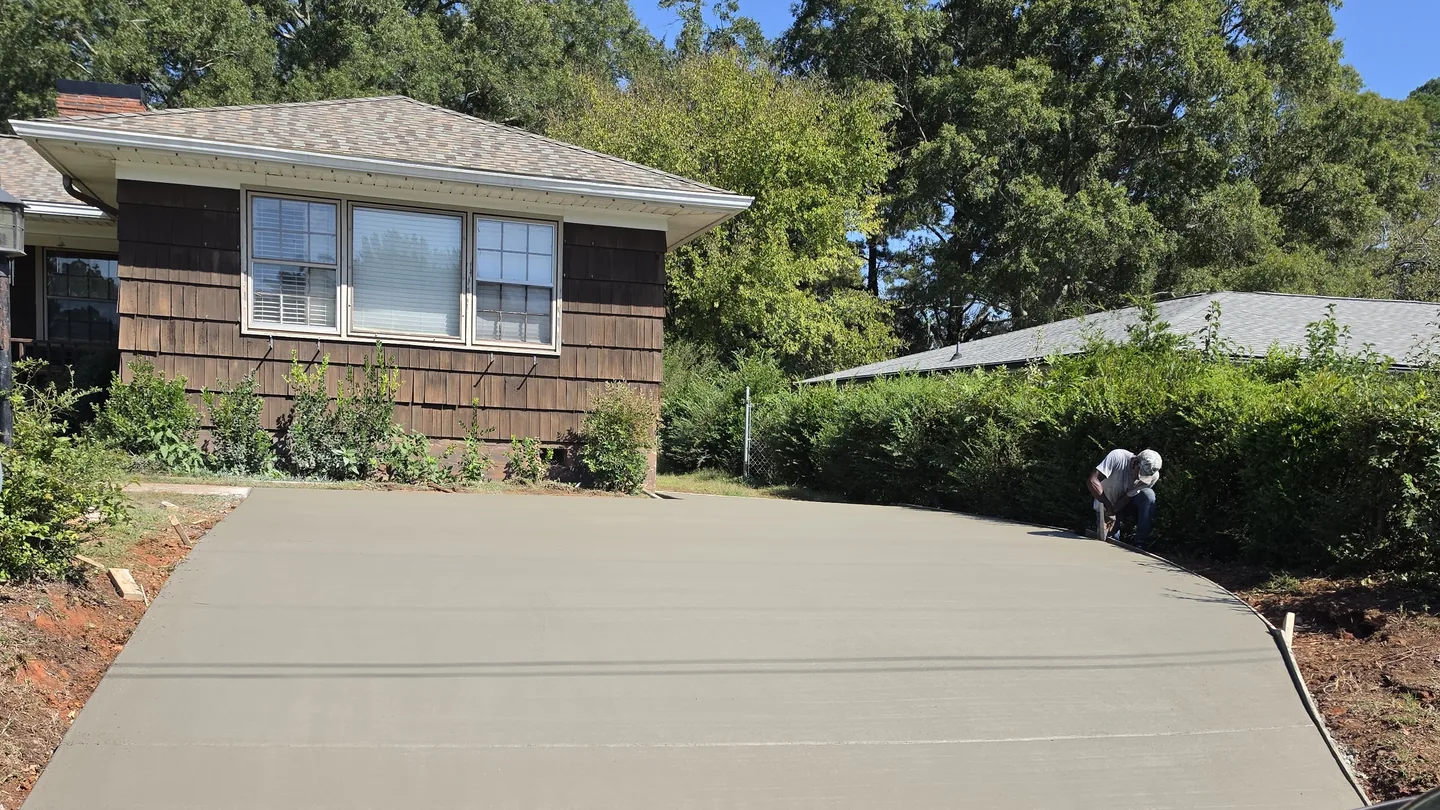
Concrete or Asphalt Driveway in Georgia: Which Lasts Longer and Costs Less?
Asphalt costs less to put down. Concrete lasts longer and needs less upkeep, and Georgia’s long, hot summers favor it. A personal finance site’s 2025 cost guide puts concrete at $8 to $20 a square foot, installed. It puts asphalt at $7 to $15. The same guide gives concrete 30 to 40 years with care and asphalt 15 to 30.
We pour concrete driveways around Villa Rica and west metro Atlanta. Asphalt is another trade, so this guide leans on published numbers for both. If you plan to stay in the house, concrete is usually the stronger buy in our climate.
What does each driveway cost in Georgia?
The guides below publish national ranges, so treat them as a yardstick for Georgia. Each one prices both materials side by side.
| Published source (kind and year) | Concrete driveway | Asphalt driveway |
|---|---|---|
| Personal finance site, citing a national cost guide (2025) | $8 to $20 per sq ft, labor included | $7 to $15 per sq ft, labor included |
| National home improvement publisher (2024) | $8 to $18 per sq ft | $5 to $15 per sq ft |
| Concrete trade education site (2026), plain gray concrete | $5 to $8 per sq ft | $3 to $6 per sq ft |
| Average whole driveway, the 2025 finance guide | just under $6,500 | a little over $5,000 |
The concrete trade site puts the average two-car driveway at 16 by 40 feet, or 640 square feet. At the 2025 rates, that drive runs about $5,120 to $12,800 in concrete. In asphalt it runs about $4,480 to $9,600.
These are market numbers, not our price list. The real figure turns on the size, the tear-out of an old drive, the grading and the base. Our guide to what a concrete driveway costs in Georgia covers each one.
Which one lasts longer in Georgia’s heat?
Heat is the big local factor. NOAA’s 1991 to 2020 normals for the Atlanta airport station show a July high of about 90 degrees. That station averages about 47 days a year at 90 or hotter. The EPA’s heat island guide says paved surfaces can reach 120 to 150 degrees in summer sun.
Asphalt is stone and sand held together by a petroleum binder, and heat softens it. Cost guides warn that long hot spells can leave asphalt tacky with crumbling edges. That is why they steer hot climates toward concrete, and why concrete is the more common drive across the South.
Concrete handles heat well, per the same guides. The EPA counts new concrete as a cool pavement because its light surface reflects more sun. It loses some of that as it weathers.
Cold is concrete’s weak spot, and Georgia winters are mild. Guides point very cold states toward asphalt because hard freezes can crack concrete. The Atlanta airport averages about 36 nights a year at or below freezing. Only about one day a year never climbs above freezing.
What does red clay mean for a driveway?
Much of west metro Atlanta sits in the Piedmont, where red clay lies under the topsoil. USDA soil descriptions for Cecil, a widespread Piedmont soil found in Georgia, show red clay starting about 8 inches down. USDA soil data for the towns around Villa Rica rate most of these soils low for shrink and swell. Rain is steady too. The Atlanta airport averages about 50 inches a year.
Either driveway sits on that clay once the topsoil comes off. What differs is how each one carries a load. A state highway pavement manual spells it out. A rigid concrete slab spreads a load over a wide area of the ground beneath it. A flexible pavement like asphalt passes the load down through its layers, so it leans harder on the base.
A soft spot under asphalt can sink into a dip or open into a pothole. Home improvement guides say large potholes often point to a base or drainage problem. Concrete still needs firm, even ground. Either way, the work calls for compacted ground and a slope that sends water off the drive.
How much upkeep does each one need?
Asphalt needs regular sealing. Home improvement guides say to seal it 6 to 12 months after paving, then every 3 to 5 years. Over 30 years, that comes to about six to ten seal jobs. National cost guides put each one at a few hundred dollars.
Concrete needs less. Sealing it is optional, and guides suggest it every few years to fend off stains. Oil drips show more on light concrete, while dark asphalt hides them. A patch blends into asphalt, but a patch on concrete stays easy to see.
The wait before you drive on it differs too. Guides put asphalt at about 1 to 3 days. Concrete takes 7 to 28 days to cure.
Which one looks better and helps resale?
Concrete looks light gray with crisp, straight edges. Asphalt starts black and fades toward gray as its binder ages and the stone shows through. The EPA notes that traffic dirt darkens concrete over time. The drives we pour get a plain broom finish.
Real estate pros say a home’s first impression matters when it goes on the market. Cost guides count the driveway as a big part of that curb appeal. Home improvement guides add that concrete may appeal to buyers more than a dark asphalt drive. How much that counts depends on the look of the street.
So which driveway should you choose?
Asphalt can make sense when the first price matters most or you plan to move soon. Concrete makes more sense when you plan to stay. You pay more up front for a longer service life and less upkeep in the heat.
If asphalt lasts 15 years, a 30-year stay includes a repave on top of the seal jobs. A concrete drive in the same span needs little upkeep, according to the guides.
Ready to price a concrete driveway?
Pro One Concrete pours new concrete driveways and handles driveway replacement, where we tear out and re-pour an old drive. We also add extensions, turnarounds, parking pads and the apron at the street. See new driveways and driveway replacement for the details.
Planning a garage or shop at the end of the drive? We pour garage and shop slabs too. We look at the job and put the quote in writing. Call or text (770) 880-4224.